



Apert syndrome is a rare genetic disorder that causes abnormal development of the skull. Babies with Apert syndrome are born with a distorted shape of the head and face. Many children with Apert syndrome also have other birth defects. Apert syndrome has no cure, but surgery can help correct some of the problems that result.
Causes of Apert Syndrome
Apert syndrome is caused by a rare mutation on a single gene. This mutated gene is normally responsible for guiding bones to join together at the right time during development. In almost all cases, the Apert syndrome gene mutation seems to be random. Only about one in 65,000 babies is born with Apert syndrome.
Apert Syndrome Symptoms
The defective gene in babies with Apert syndrome allows the skull bones to fuse together prematurely, a process called craniosynostosis. The brain continues to grow inside the abnormal skull, putting pressure on the bones in the skull and face.
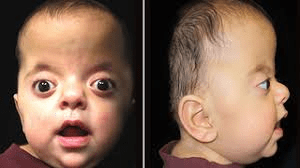
The abnormal skull and facial growth in Apert syndrome produce its main signs and symptoms:
- A head that is long, with a high forehead
- Wide-set, bulging eyes, often with poorly-closing eyelids
- A sunken middle face
Other Apert syndrome symptoms also result from the abnormal skull growth:
- Poor intellectual development (in some children with Apert syndrome)
- Obstructive sleep apnea
- Repeated ear or sinus infections
- Hearing loss
- Crowded teeth due to underdevelopment of the jaw